If you have ever dipped into a cold stock tank pool and immediately regretted your decision to swim, you probably did what I did, looked up ways to heat your pool. When we set up our stock tank we didn’t want a cold plunge pool, we wanted a refreshing oasis where we could relax. Many online stock tank pool groups and videos share some interesting ways to heat your pool, from using wood fired heating to propane shower heaters. Admittedly these methods will work but you will have some trade offs and they are not as convenient as a dedicated heater.
If you are still planning your Stock Tank Pool, start with my guide to setting up a DIY stock tank pool with a liner.
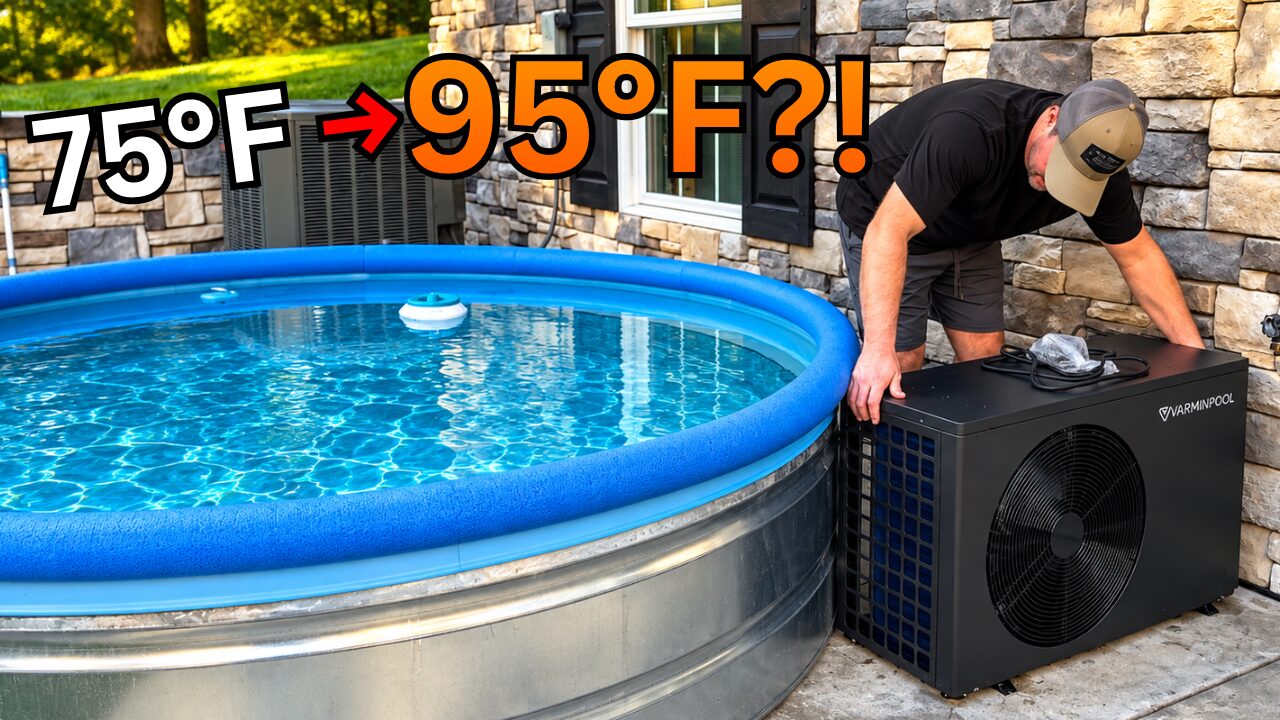
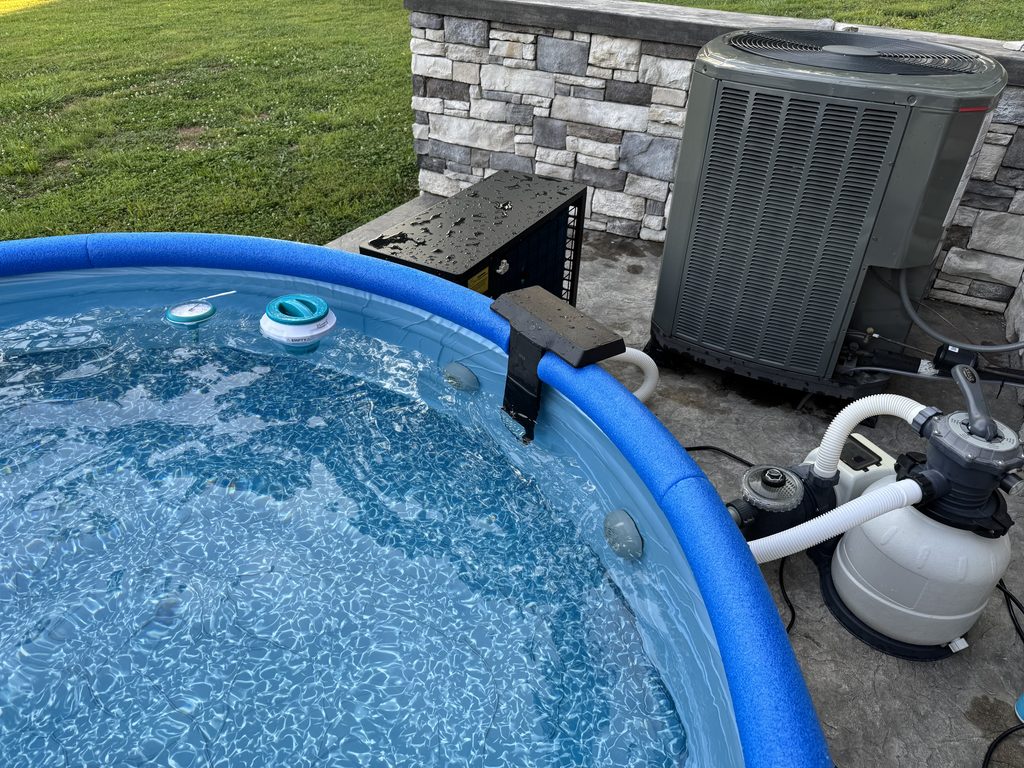
Like many of you, I really wanted to extend my swimming season. I added a VARMINPOOL V7 Plus 30,000 BTU pool heat pump to my 8-foot stock tank pool, which holds about 700 gallons. I wanted to see how it would connect to my Intex sand filter and how much of a difference it would make to control the temperature.
In this guide, I’ll show how I unpacked and positioned the heater, connected it to my filter, primed the system, and set up the Wi-Fi app. I’ll also share the results from my test.
VARMINPOOL V7 Plus Pool Heat Pump Specifications
Here are the main specifications that mattered for my installation:
● 30,000 BTU heating output
● 120-volt power
● 7.1-amp listed current draw
● 1,200–2,000 GPH listed water-flow range
● 59–104°F heating range
● Wi-Fi and app control
● Heating and cooling modes
● Titanium heat exchanger
● Manufacturer-listed sound level of 48 dB ( To keep the neighbors happy)
You can check the current specifications on the VARMINPOOL V7 Plus product page.
Always verify the current specifications and installation requirements for your exact model before purchasing or connecting it.
Tools and Supplies I Used
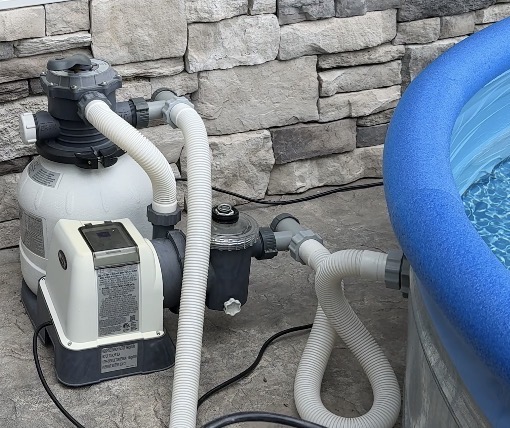
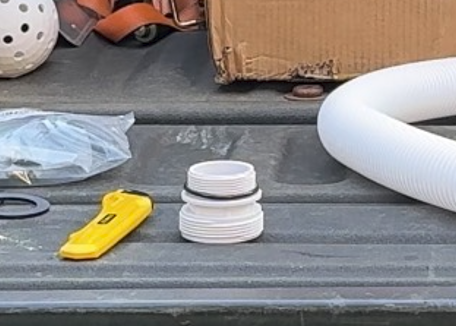
The exact adapters will depend on your filter and hose setup, but this is what I used or recommend having available. I am using an Intex 2100 GPH sand filter pump. You will need an extra hose and adapters to connect to the heater if you have this same setup.
● Adjustable wrench or channel-lock pliers
● Clean towel or rag
● Pool thermometer
● Smartphone for Wi-Fi setup
Use tools carefully around plastic fittings. Most gasket-sealed pool connections should be hand-tightened first and should never be forced.
Pool Equipment and Connection Parts
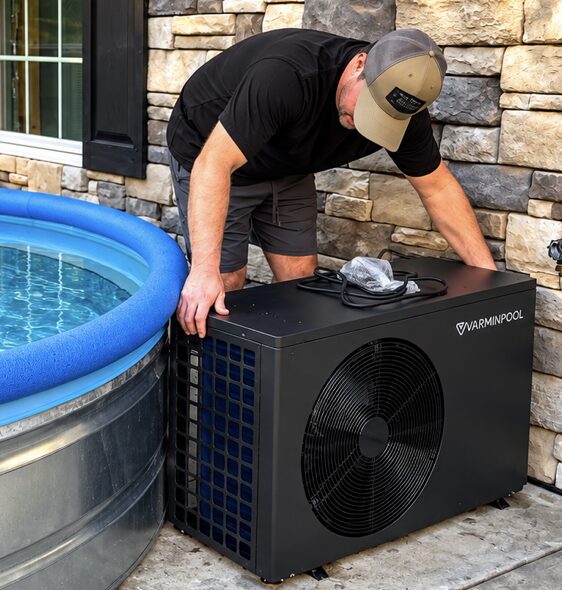
VARMINPOOL V7 Plus Heater
VARMINPOOL provided the V7 Plus heater at no cost. Some links above may be affiliate links, which means I may earn a commission if you buy through them, at no extra cost to you.
Unpacking and Positioning the Pool Heater
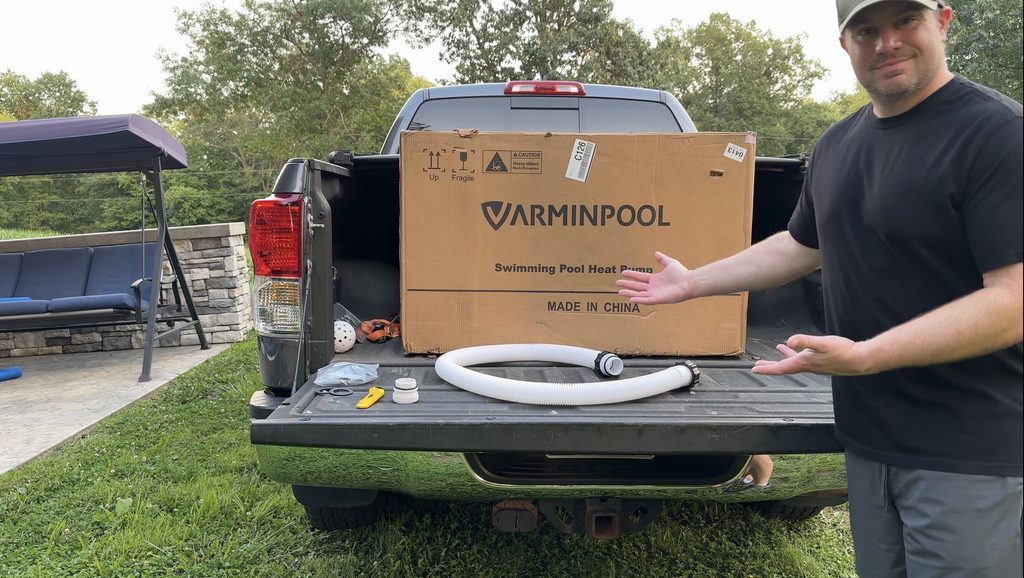
The heater arrived well protected, and the first thing I did was inspect the cabinet, power cord, water connections, and included fittings for shipping damage. This is also a good time to read the manual and identify the labeled water inlet and outlet before moving anything into place.
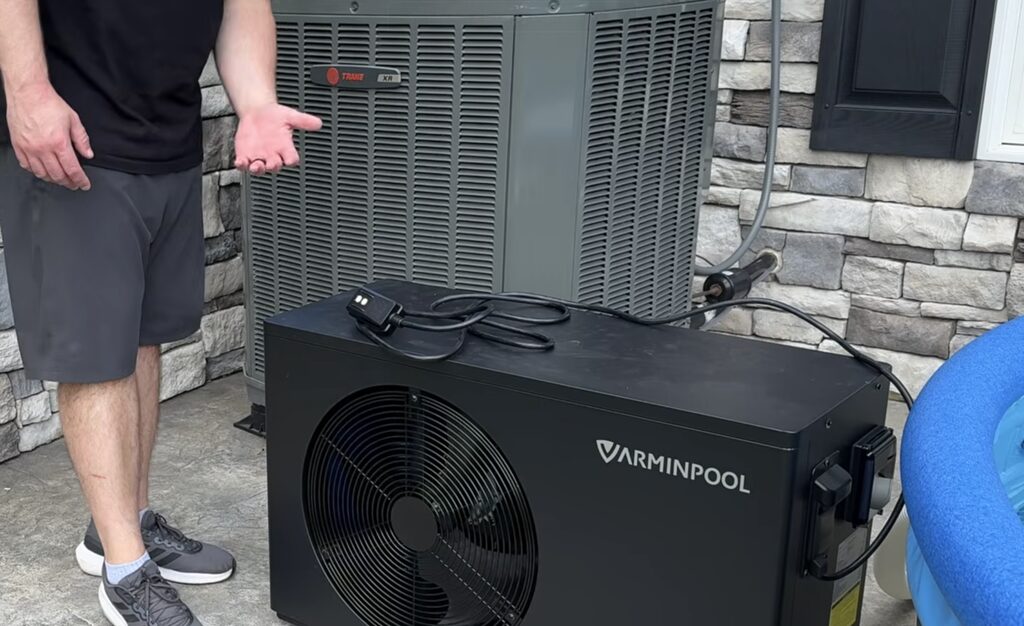
A heat pump needs open airflow because it pulls heat from the surrounding air and transfers that heat into the pool water. This is the same concept if you have a heat pump for your house HVAC.
I placed mine outdoors on our concrete patio. I also kept it close to my filter equipment so the hose carrying heated water back to the pool stayed reasonably short. In the future I may want to extend the heater out further, but I didn’t have very long hoses.
VARMINPOOL’s installation guide recommends a solid, level base and keeping the heated return run under 10 feet when possible. Do not box the heater into a small enclosure. I also note that if you live in a seasonal area like me you will want to be mindful of leaves, standing rain water, or snow.
Connecting a Stock Tank Pool Heater to an Intex Sand Filter
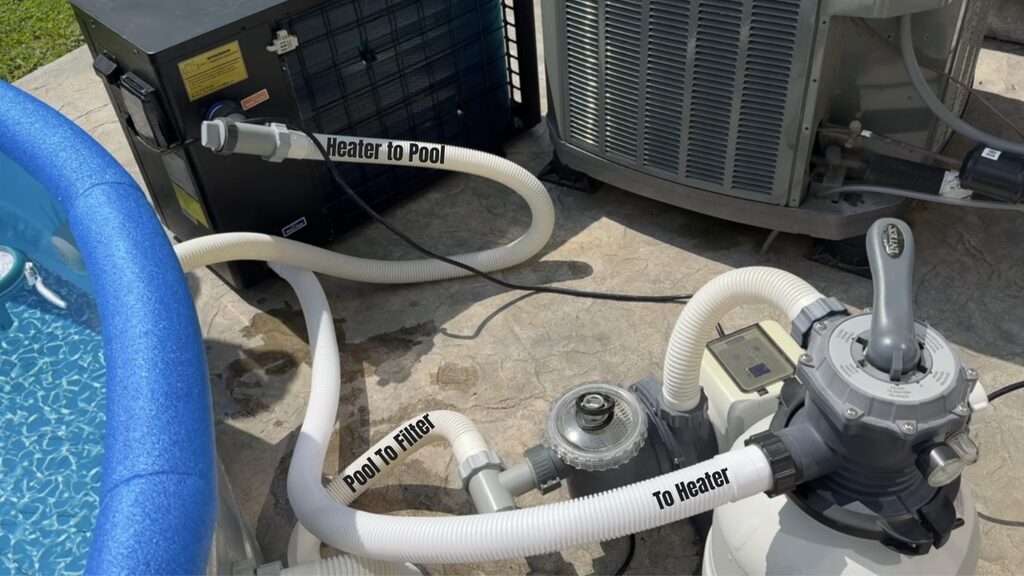
The heat pump goes after the filter in the circulation system. My water path is:
Stock tank pool → Intex sand filter pump → VARMINPOOL heat pump → return fitting on the pool
This ensures the filter and pump are pushing the water through the heat exchanger before returning the warmed water to the pool.
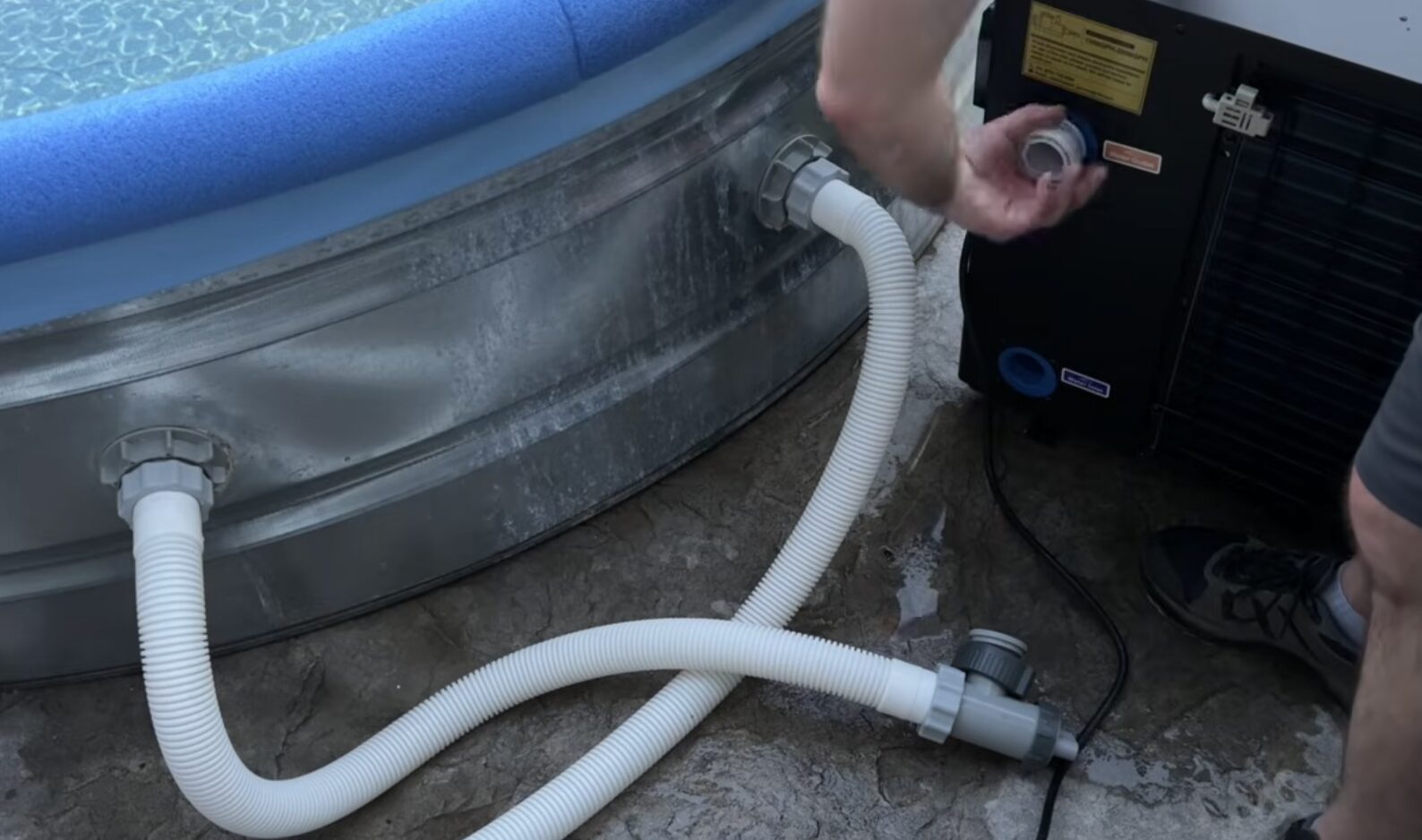
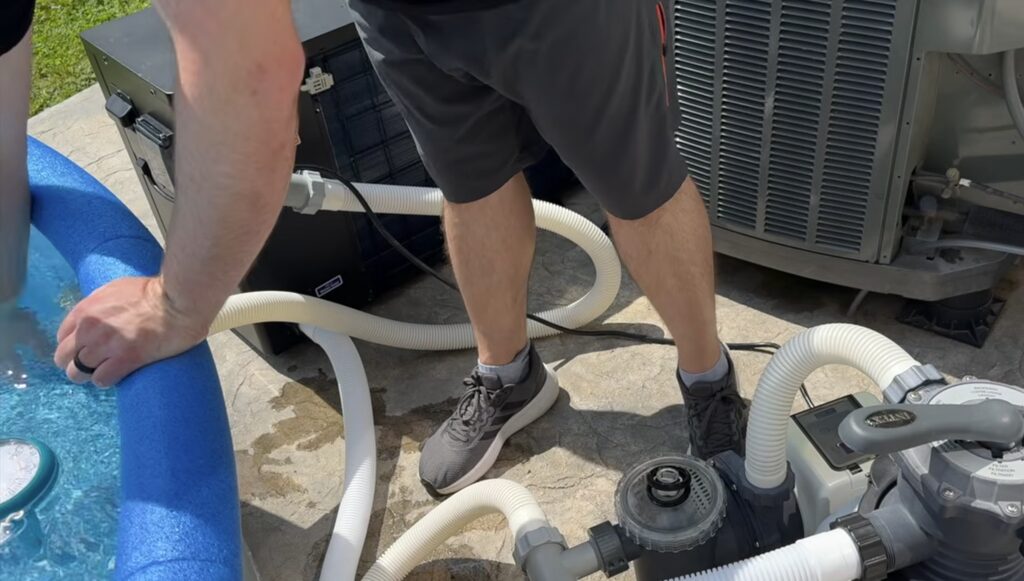
Hookup is simple and you don’t even have to drain your pool if you have plunger valves on your lines. I removed the return line from the pool. I connected the filter outlet hose to the heater’s water inlet, then connected the heater outlet to the pool return. Simple and fast.
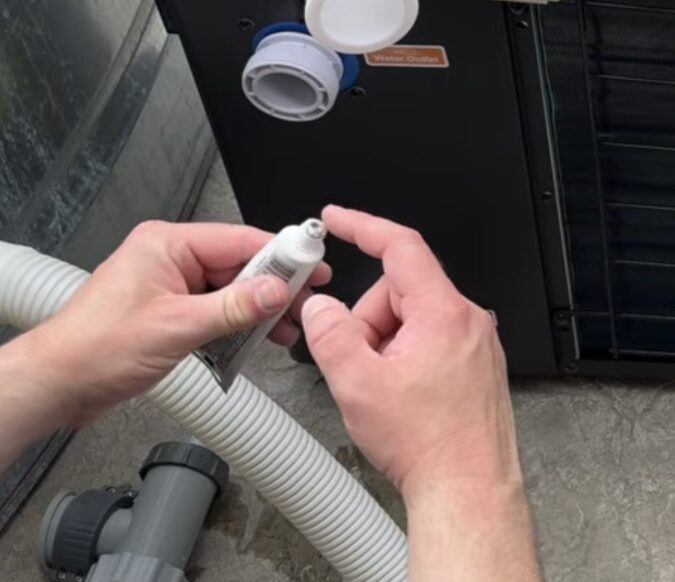
Before tightening everything, I checked that every flat washer and O-ring was present, clean, and sitting flat. Missing or twisted washers are one of the easiest ways to create a leak. I applied a light coating of silicone lubricant to the rubber seals and tightened (by hand) the connections without overtightening the plastic.
Because Intex and standard pool-equipment connections do not always use the same thread style, confirm adapter compatibility before ordering parts. A fitting that appears to thread on is not necessarily making a proper watertight seal.
Note: I have also learned that the two part fitting threaded clasps can slip on the cheaper knock off Intex fittings. When possible, order Intex brand or read the reviews before purchasing. I sent some cheap adapters back due to poor thread fitment.
How I Primed the Stock Tank Pool Heater
The circulation system needs to be full of water and free of trapped air before the heat pump can operate correctly. I left the heater off, opened the necessary valves, and started the Intex filter pump first.
As water entered the hoses and heater, I worked the trapped air out of the system using the filter’s normal priming and air-release procedure. I felt the return inside the pool until I had steady water flow without large bursts of air. I also checked every new connection for drips.
Only after the filter was circulating water normally did I power on the heat pump. If the heater reports a low-flow error, check for trapped air, closed valves, a clogged filter, kinked hoses, or insufficient water flow before assuming there is a problem with the heater.
Note: Failure to prime the system can burn up the heater and pump. If you notice water isn’t circulating after a few seconds stop and reprime.
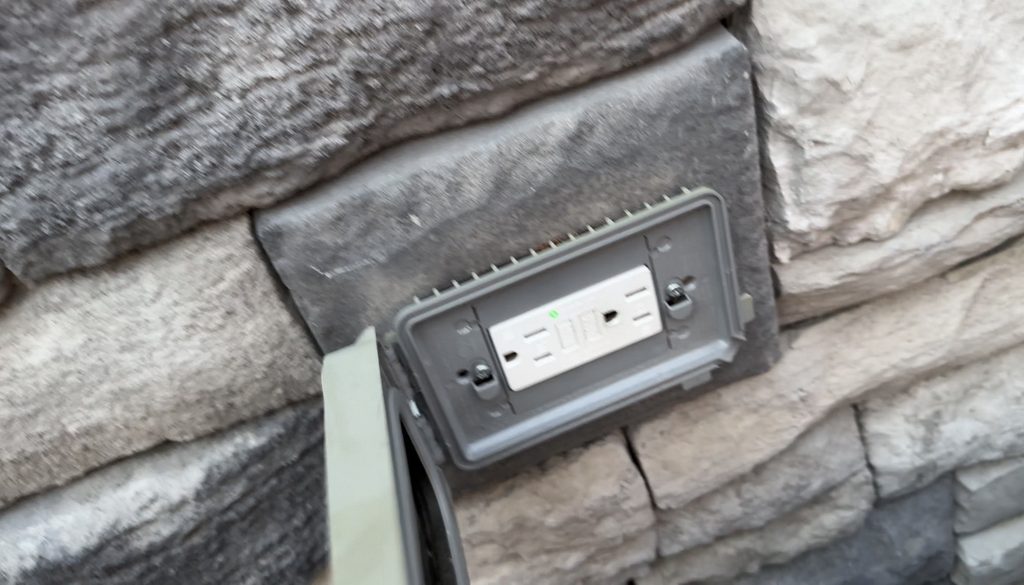
The V7 Plus operates on 120-volt power and draws up to 7.1 amps according to VARMINPOOL’s listing. I connected mine using the protected outdoor power receptacle.
Any electrical equipment used around a pool must follow the manufacturer’s instructions and applicable electrical codes. Use a properly grounded, weather-protected, GFCI-protected receptacle. Do not place plug connections where they can sit in water, and do not make permanent electrical changes unless you are qualified to do so. When in doubt, use a licensed electrician.
Controls and Wi-Fi App Setup
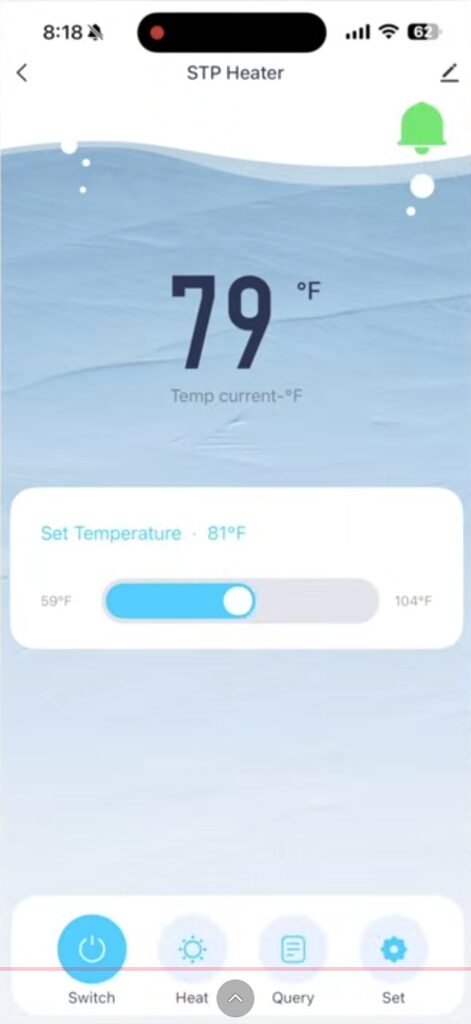
The onboard control panel lets me turn the heater on, choose heating or cooling, adjust the target temperature, and set a schedule.
To set up the Smart Life app:
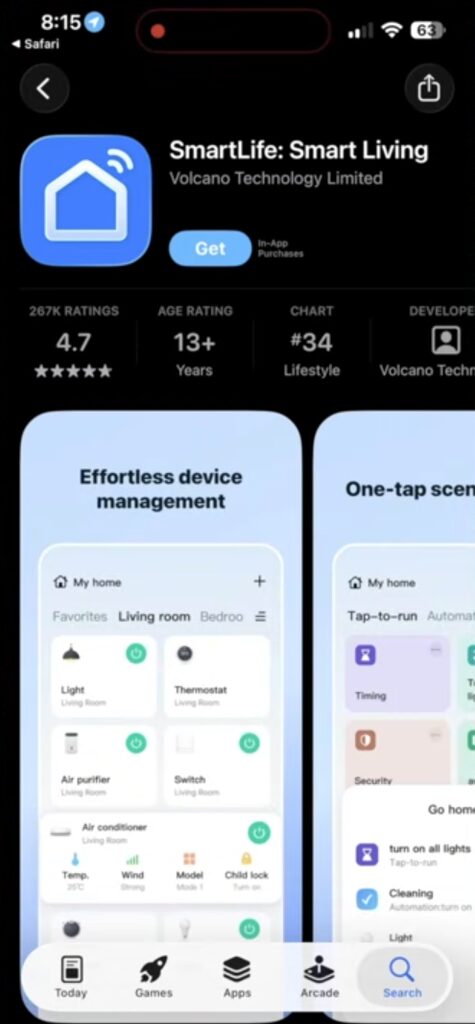
- Scan the QR code in the heater’s instructions to find the Smart Life app in your phone’s app store, then download it.
- Open Smart Life and allow alerts when prompted.
- Create an account using your email address.
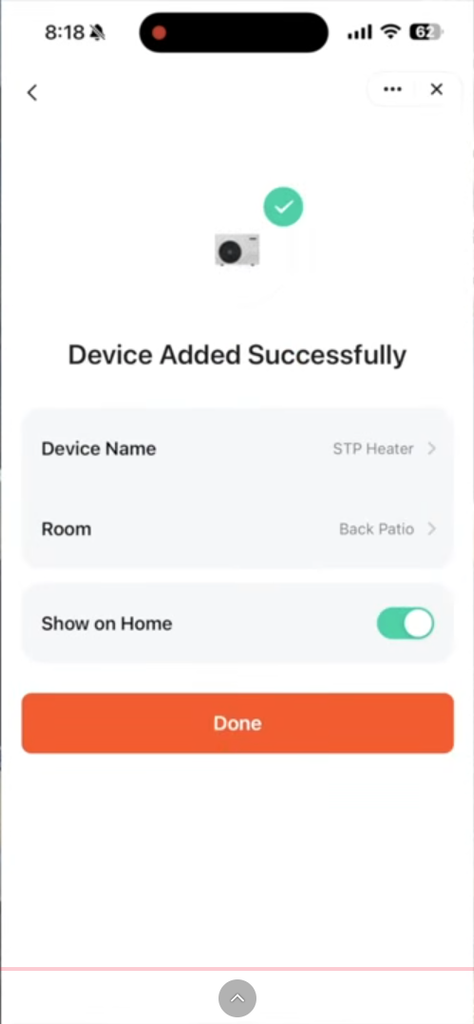
- Tap Add a device. The heater appeared in the app for me, so I selected it and followed the prompts to connect.
- Connect the heater to your Wi-Fi network.
- Give the device a name and select the room or area where it’s located.
Once connected, the app lets me remotely check the heater and pool temperature, adjust the target temperature, switch between heating and cooling, and set an operating schedule. On my app screen, I could also see incoming, outgoing, and ambient temperatures.
For a visual walkthrough, watch my video setting up the app.
Real Stock Tank Pool Heating Results
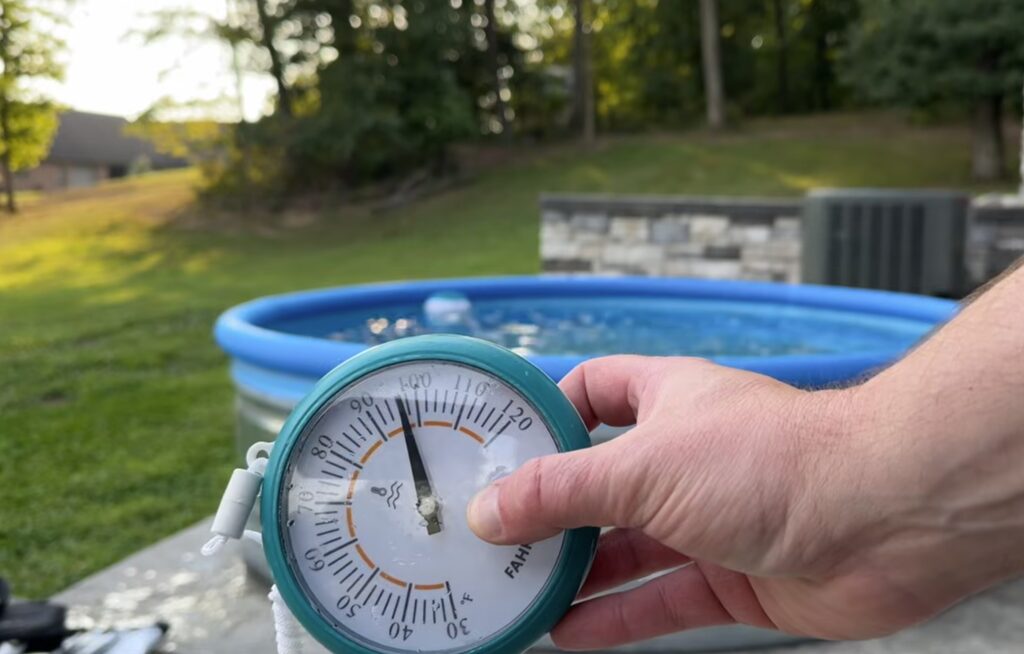
The real question was whether this heater could make a noticeable difference in a 700-gallon stock tank pool. On a day when the outdoor temperature was approximately 75°F, I ran the circulation system and heat pump and watched the water temperature climb into the low 90s.
That is more than warm enough for my pool. The result also showed why a heat pump paired with a much smaller water volume can be effective under favorable conditions. However, heating performance will change with air temperature, starting water temperature, wind, humidity, sunlight, hose length, and whether the pool is covered.
A heat pump is not the same as an instant gas heater. It works gradually and becomes much more useful when paired with a cover that keeps the heat you have already paid to put into the water.
See the results for yourself below:
Is the VARMINPOOL V7 Plus a Good Stock Tank Pool Heater?
For my setup, the VARMINPOOL V7 Plus successfully heated my stock tank pool and gave me much more control over the water temperature. I especially like being able to adjust it from the app instead of walking out to the equipment every time.
The biggest installation considerations are having compatible hose adapters, adequate filter flow, open airflow around the heater, and a safe outdoor electrical supply. You also need realistic expectations: weather conditions and overnight heat loss will always affect performance.
If your goal is to take the chill off a stock tank pool, make cooler days more comfortable, or extend the usable part of the season, a pool heat pump is an upgrade worth considering.
Check the VARMINPOOL V7 Plus Here
Make sure to use the Discount code: HANDBUILT10
Frequently Asked Questions
Where does a pool heat pump connect?
Install it after the filter and before the water returns to the pool. Follow the inlet and outlet markings on the heater.
Does the filter pump need to run while the heater is operating?
Yes. The heater needs continuous water flow through its heat exchanger. Start and prime the filter pump before turning on the heater.
Can the VARMINPOOL V7 Plus work with Intex hoses?
It worked with my Intex sand-filter system using compatible hoses, adapters, and sealing gaskets. Verify the thread type and size for your exact Intex equipment and heater fittings.
Will a pool cover help the heater?
Yes. Covering the pool when it is not in use reduces heat loss, especially overnight and during windy conditions.